War and Its Traces in the Bieszczady
World War I left thousands of graves of soldiers from the Austro-Hungarian, Russian, and German armies across the Bieszczady region. Many of them never received a proper burial — time erased their graves, and the earth leveled them with the surface. In the fiercest battle areas, numerous collective and individual graves were created, often for anonymous heroes, usually made by their comrades in arms during breaks in fighting.
Józef Pawłusiewicz, in his book At the Bottom of the Lake, describes the tragic fate of one cavalry unit: a Russian regiment was ambushed near Werlas, losing about 250 men along with their commander within minutes. The fallen were buried in a single grave at an old manor in the forest. Unfortunately, none of the authorities at the time cared for their resting place.
The establishment of the cemetery
The area around Lesko was the site of intense battles and skirmishes. From July 1914 to September, the advancing Russian army forced the Austro-Hungarian troops to retreat after a lost battle towards Baligród. On October 5, Austro-Hungarian units under General Kovacs expelled the Russians from Lesko, but after a heavy battle on November 7, the city was again captured by the Russians. The Austrians withdrew to Tarnawa and Sanok.
The winter period of 1914-1915 brought further fierce fighting in the Lesko region and along the Baligród-Cisna line. The large number of fallen soldiers and those who died in field hospitals necessitated the creation of a war cemetery next to the old parish cemetery. The first burials included soldiers who died from wounds and illnesses in field hospitals organized, among others, in the Krasicki Castle and the Greek Catholic rectory, located on the site of the present-day Lesko District Hospital.
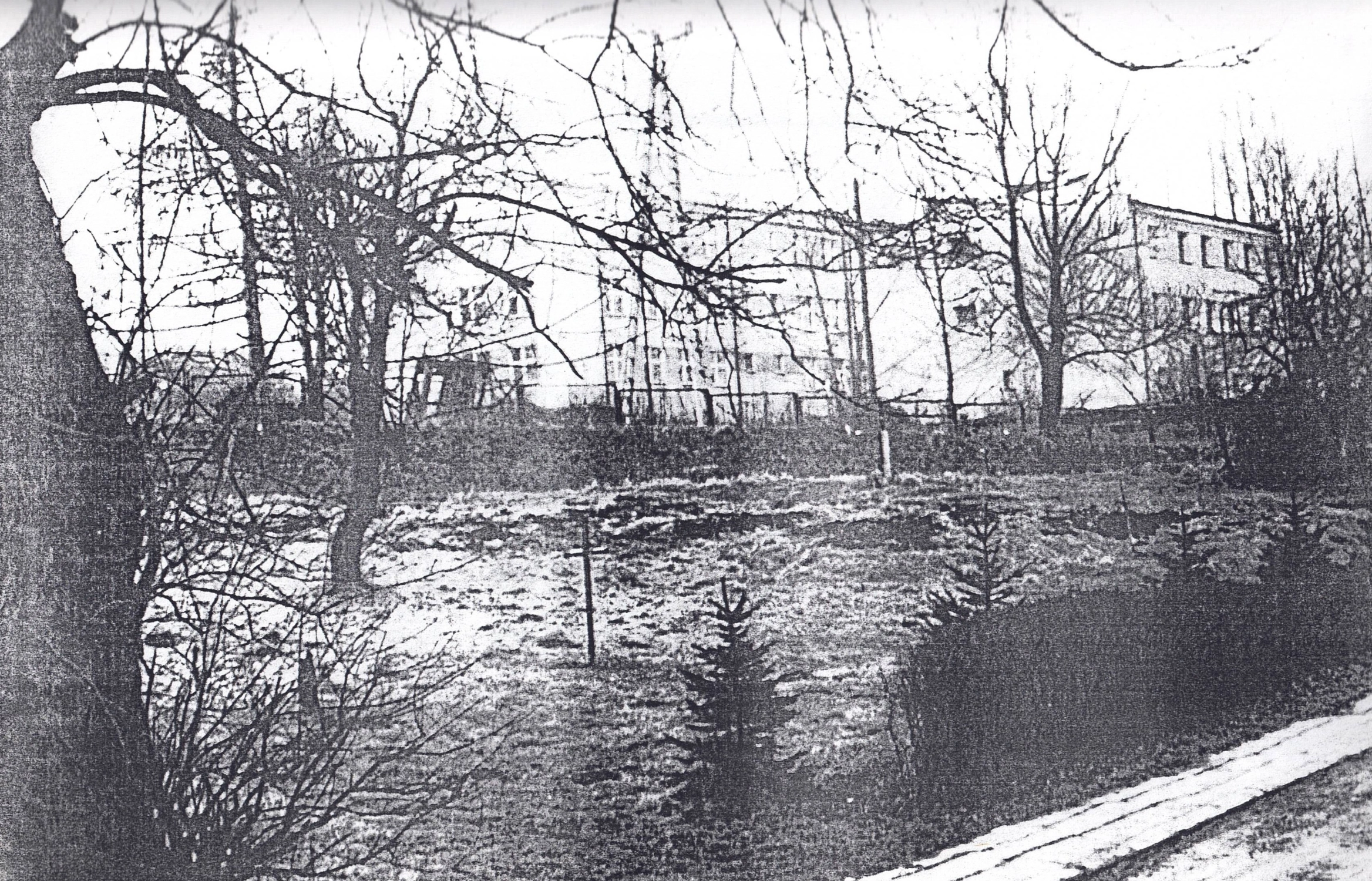
Organization and Construction of the Cemetery
The construction of the cemetery was overseen by the War Graves Department — K. und K. Kriegsgräberabteilungs Komando No. 4, stationed in Rymanów under the command of the Przemyśl fortress. This unit also operated at other war cemeteries, such as in Komańcza, employing a similar architectural style.
The work at the cemetery was carried out by prisoners of war — Russians and Serbs — recognized as skilled craftsmen in woodwork. The town of Lesko took an interest in the project, especially due to the necessity of exhuming soldiers temporarily buried in the area. Supervision of the work was conducted by Filip Votruba, Imperial and Royal County Commander of the Gendarmerie.
Burials were not segregated by army affiliation. All the fallen rested together — “enemies in life, reconciled in death.” Maintaining precise records was difficult due to the constant movement of units and hospitals, as well as the siege of the Przemyśl fortress.
Wygląd cmentarza w latach 1916-1939
On an area of about 1450 m², there were 31 mass graves and several individual ones. Each mass grave held 20–30 fallen soldiers. It is estimated that around 600 soldiers from three armies rest in the cemetery. The armies fighting in the region were multinational, including Poles—often forced to serve under foreign flags. The Austro-Hungarian army comprised Austrians, Bosnians, Croats, Czechs, Slovaks, Slovenes, Hungarians, Romanians, and Ukrainians. Serbs fought allied with Russia. The cemetery is the resting place of followers of the Roman Catholic Church, Evangelical Church, Orthodox Church, Greek Catholic Church, as well as Muslims.
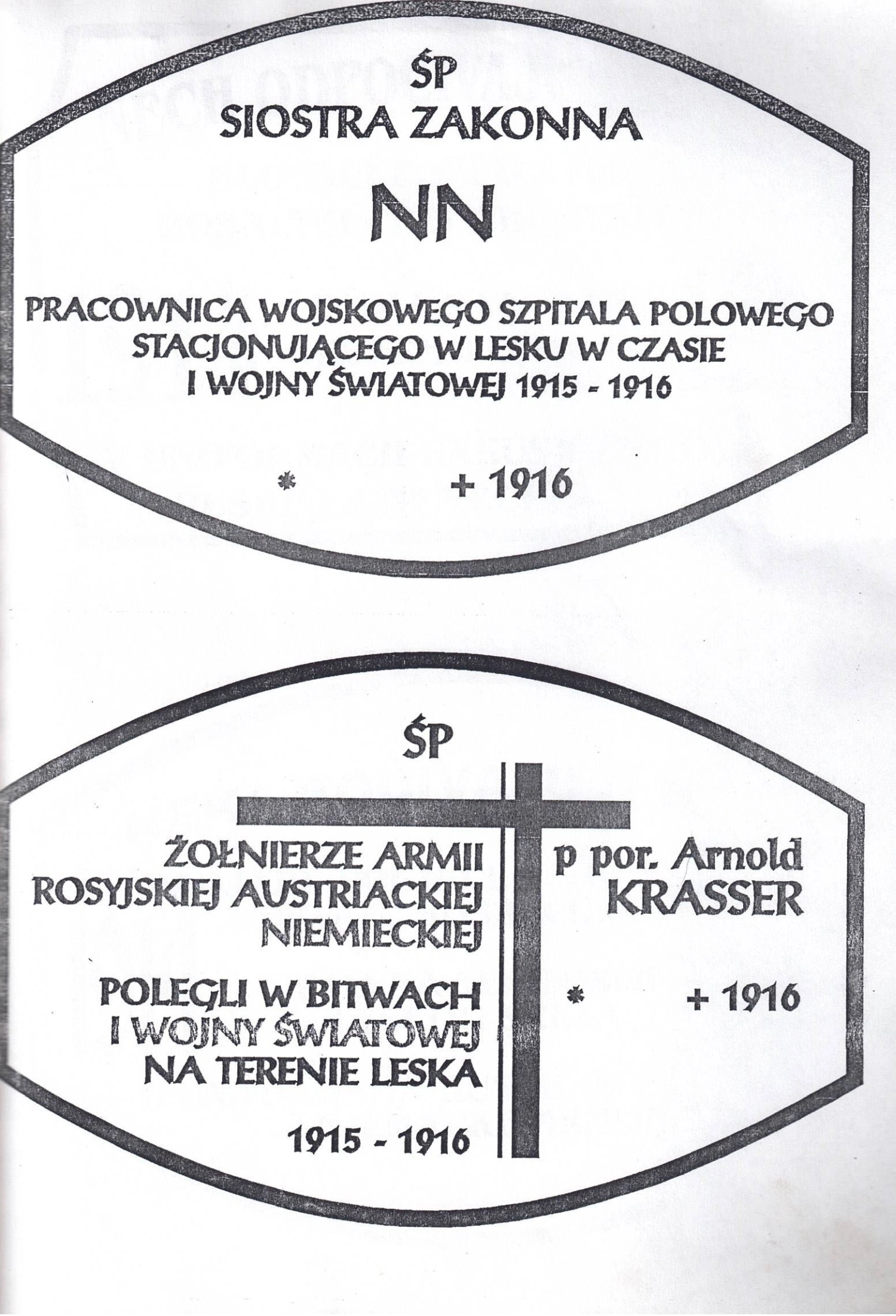
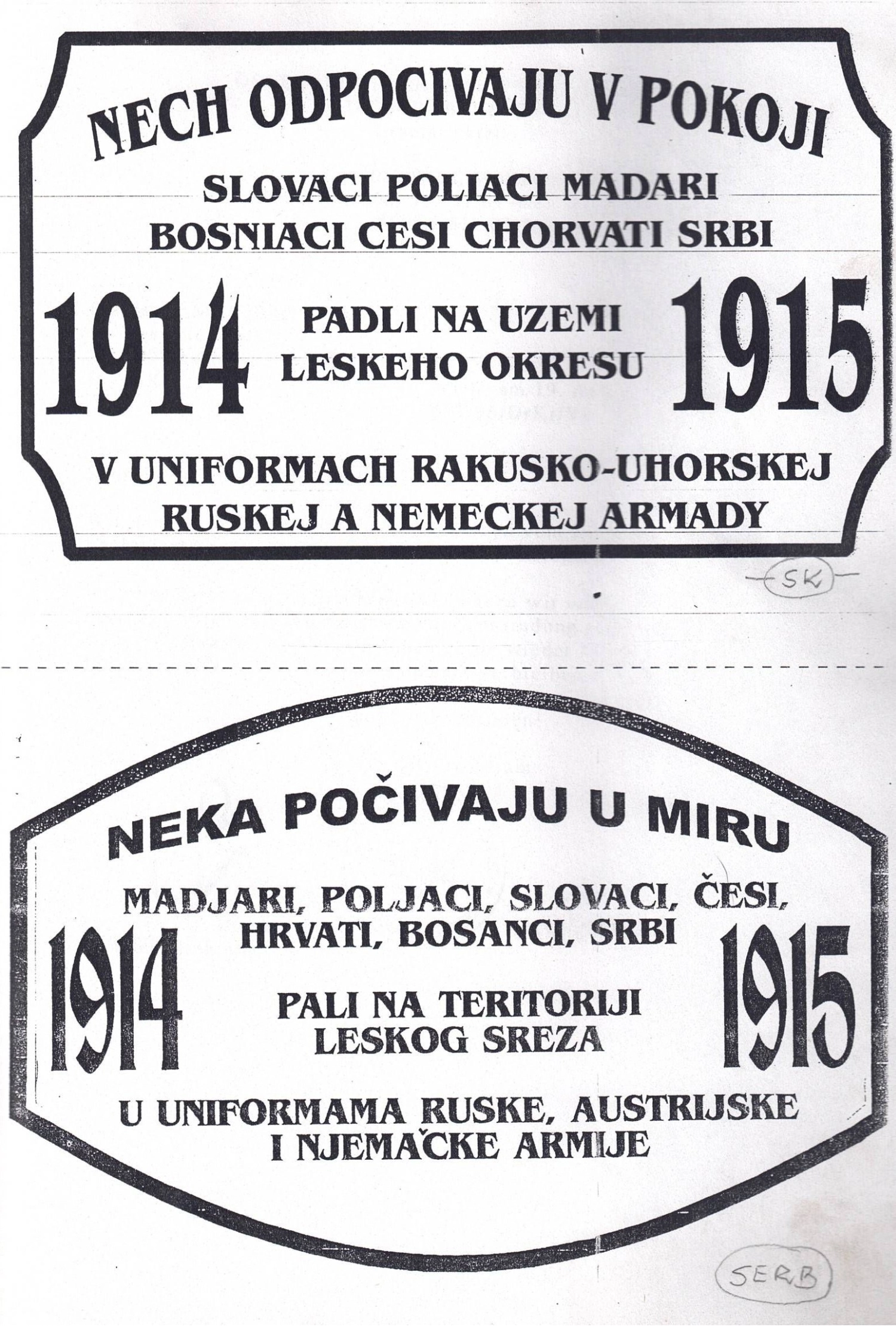
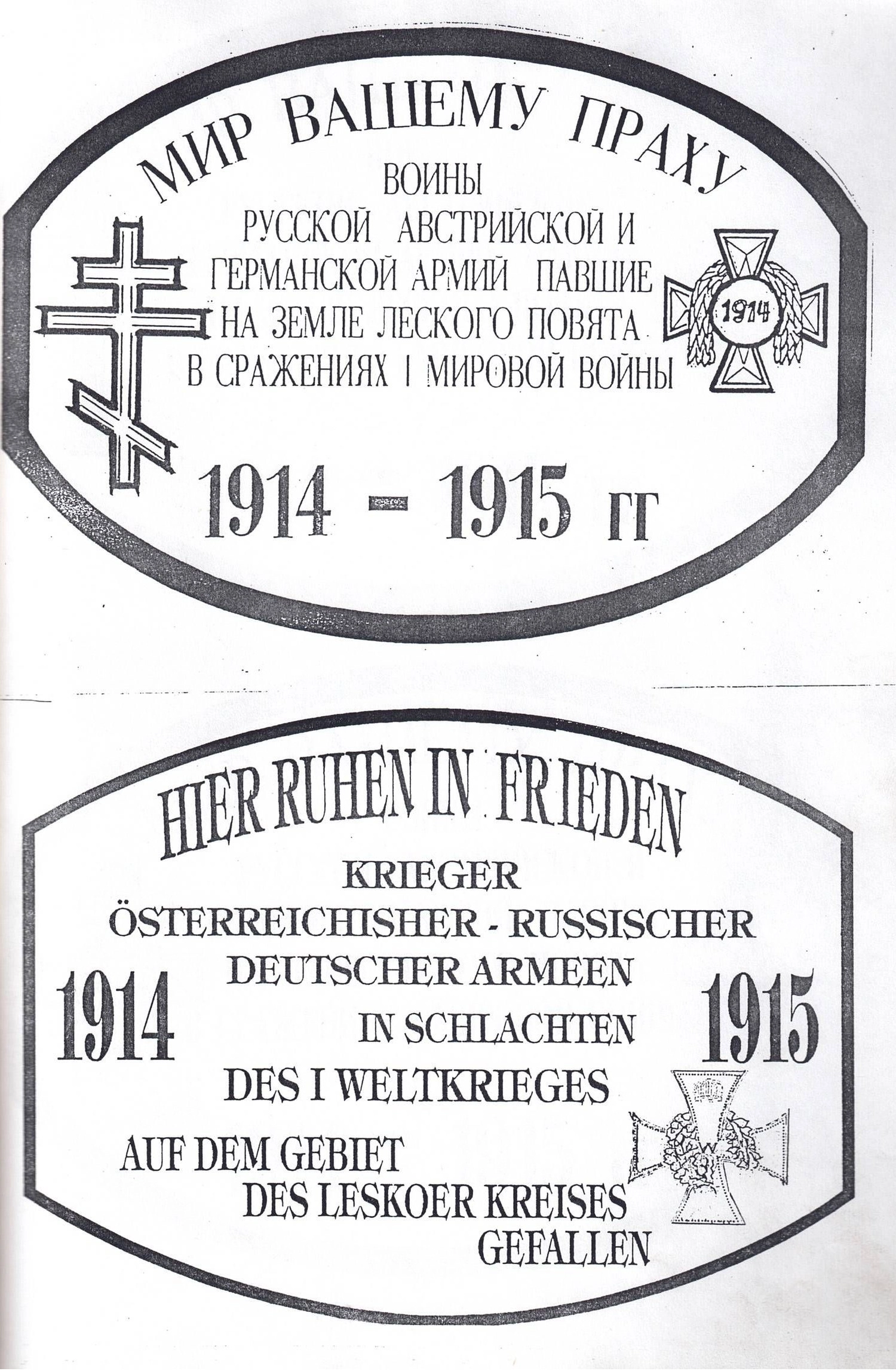
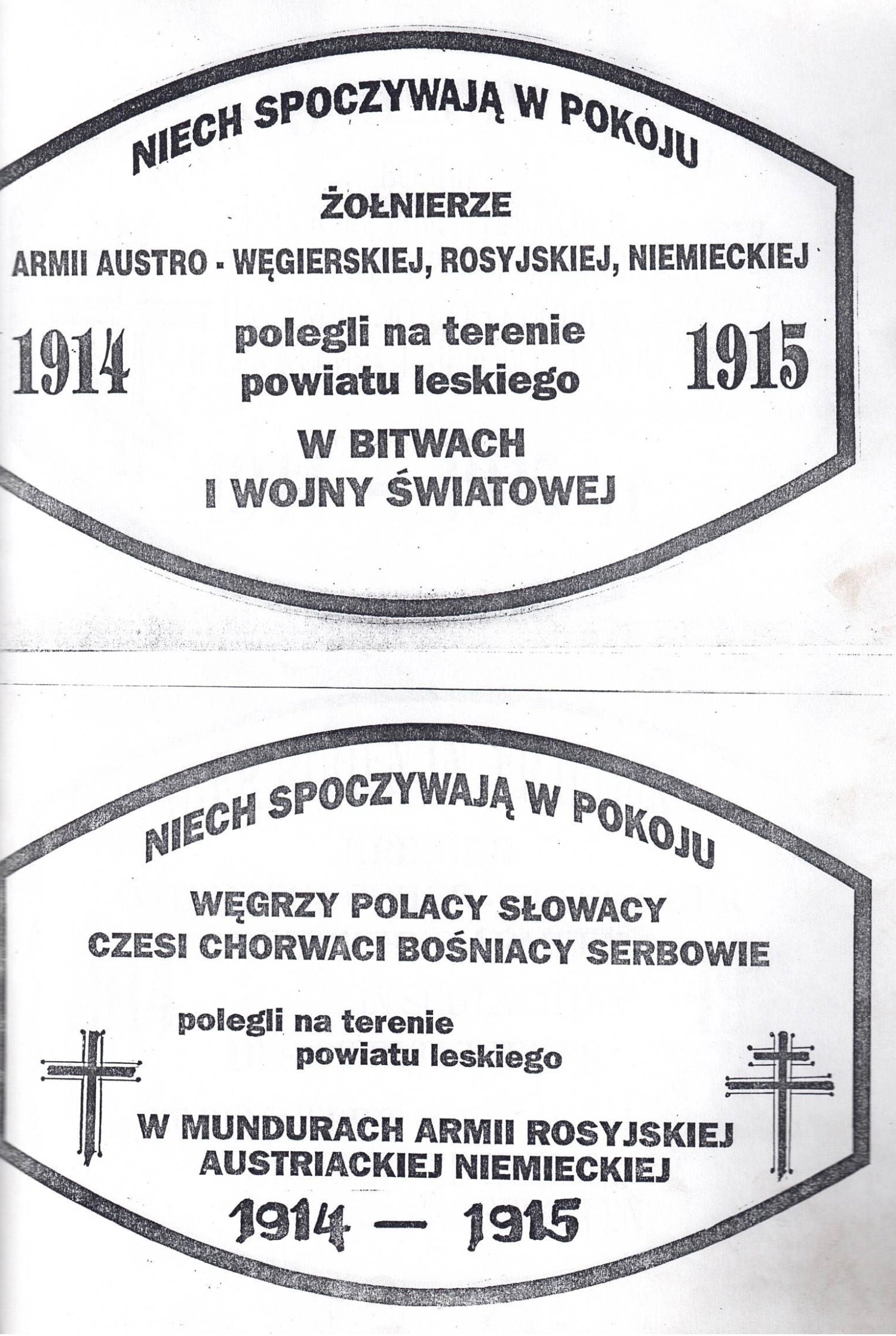
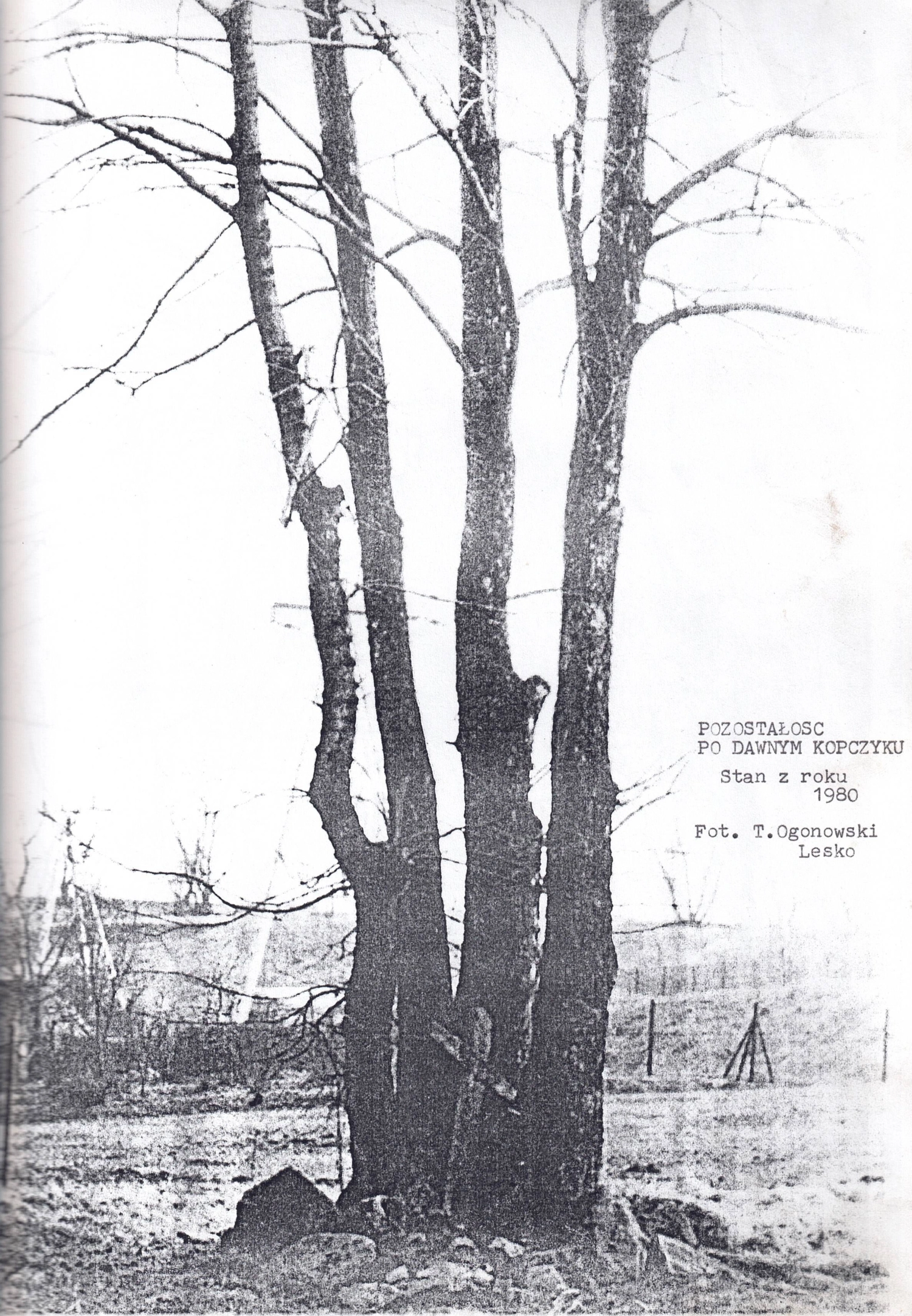
On the mass graves, oak grave posts were placed, about 30 cm in diameter and 70 cm high, with a 45° angled cut on the face. On the face was mounted a cross made of thin sheet metal or metal flat bar, and below metal plaques with information about the buried. Individual graves had low wooden or metal crosses.
The entrance gate was made of wooden beams and slats, flanked by posts with semicircular arch connections. On the top was a Latin inscription:
„MORS SOLA VICTRIX – GLORIA VICTRIS”
(“Since only death is the victor, therefore glory to the defeated”).
Below were plaques with inscriptions in Polish, Russian, German, and Serbian. The center of the cemetery was adorned with a tall cross surrounded by a mound of earth with an inscription plaque in three languages: Polish, Russian, and German.
The cemetery fence was made of barbed wire, modeled after military entanglements.
Ceremony of consecration and later history
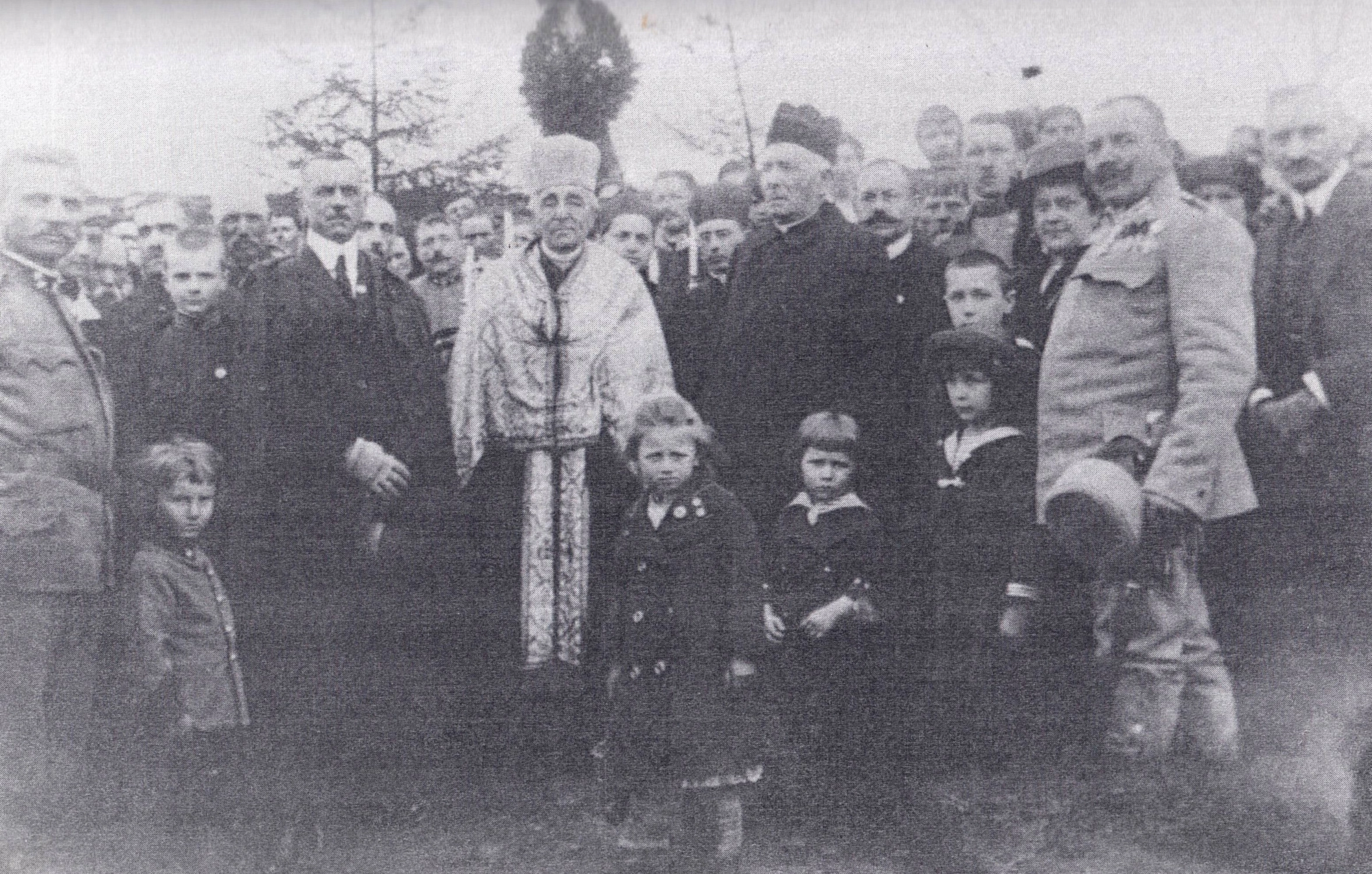
On April 30, 1916, a solemn funeral procession took place from the parish church and the Church of St. Nicholas, led by priests of various denominations. Residents of Lesko, local authorities, as well as officers and soldiers of the Austro-Hungarian army participated in the event. The ceremony had a patriotic and religious character and served as a tribute to the fallen.
After the war, families who had the opportunity relocated the remains of their loved ones to their homelands — for example, the wife of an Austrian army colonel took her husband’s body to Bosnia.